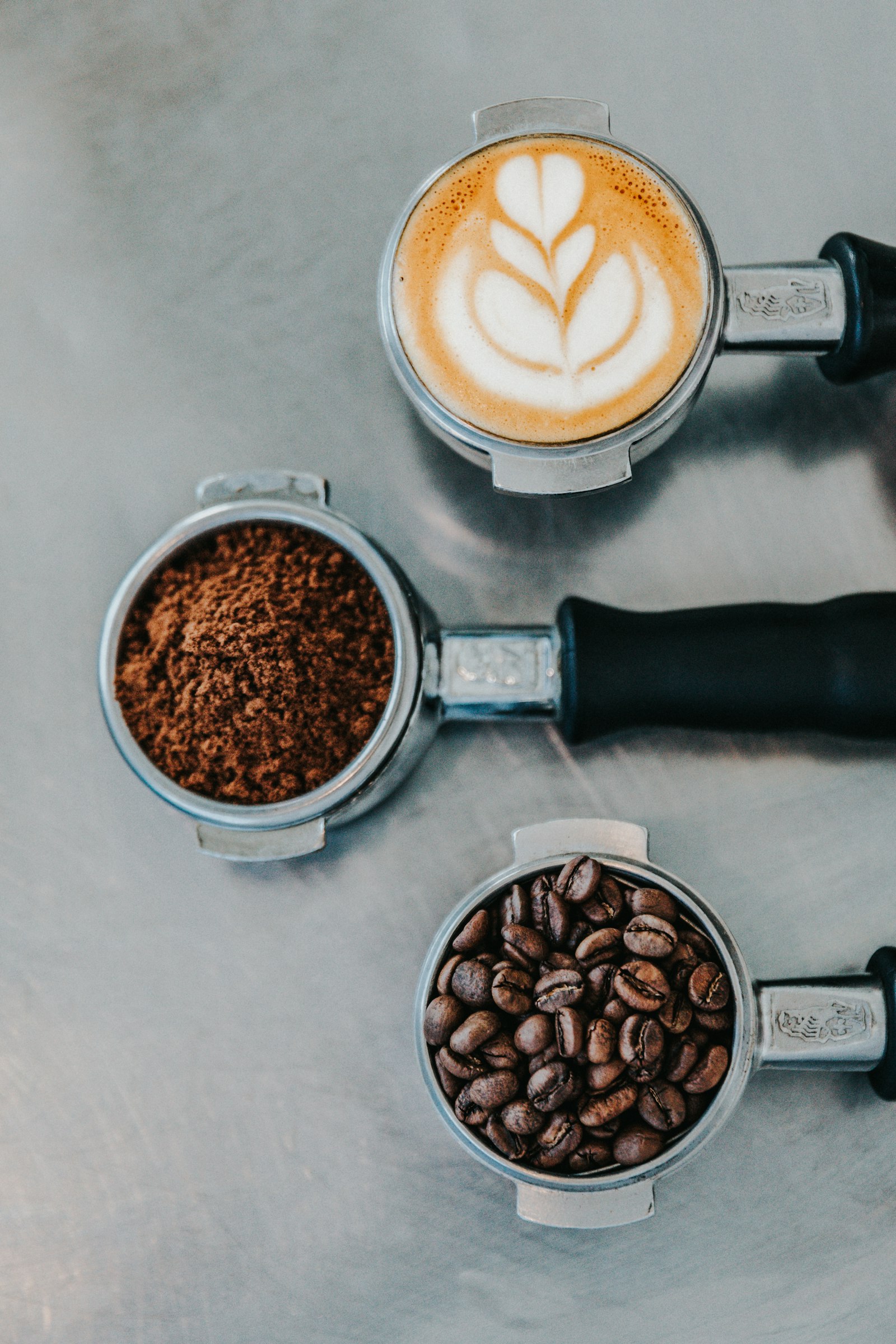
Walk down Calle Ocho on any weekday morning and you'll hear the same sound in a dozen languages: the hiss of an espresso machine, the clink of a tiny spoon against a tiny cup, and the quiet negotiation at the ventanita — "Dame un cafecito, por favor." Cuban coffee is a drink, yes, but it's also a punctuation mark. It opens the day, closes a meal, interrupts a meeting, and softens the edges of everything in between.
If you've ever been handed a thimble of something caramel-dark with a tan crema that looks almost whipped, and wondered what exactly you were drinking — this guide is for you. We'll decode the four drinks you need to know, explain the technique behind that signature foam, and tell you which supermarket can on the Cuban coffee aisle is actually worth buying.
A quick history of coffee in Cuba
Coffee arrived in Cuba in 1748, brought by Spanish colonists, but it was French planters fleeing the Haitian Revolution in the early 1800s who turned the eastern highlands into a legitimate coffee region. By the mid-nineteenth century, Cuba was one of the world's largest coffee exporters. The industry collapsed, rebuilt, and collapsed again through the twentieth century, but the daily ritual never faltered — in Havana, in Santiago, and later in Miami, coffee remained the thread that stitched the day together.
The Cuban style of brewing — small, strong, sweetened at the moment of extraction — likely evolved from Italian espresso traditions filtered through Cuban economics and Cuban taste. Where an Italian takes espresso bitter and black, a Cuban takes it dark and sweet, and does so about four times a day.
The cafecito: the one you really need to know
A cafecito (also called café cubano) is the beating heart of Cuban coffee culture. It is a single or double shot of dark-roast espresso, pulled over a layer of white sugar that has been whipped with the first drops of coffee to form a pale, glossy foam called espuma. The espuma is not optional. It is the thing.
You serve it in a tiny demitasse — maybe two ounces — and you drink it in two or three sips, standing at a counter if possible. It's not meant to be sipped slowly. It's meant to deliver a small jolt of sweet caffeinated clarity and send you on your way.
How to make a proper cafecito at home
You need three things: a stovetop moka pot (an Italian Bialetti is standard; the 3-cup or 6-cup size is ideal), a dark-roast espresso-grind Cuban coffee, and plain white sugar. That's it.
Start by putting about one and a half to two teaspoons of sugar per serving into a small heatproof pitcher or a mug. Fill the moka pot with water to the fill line, pack the coffee basket level (don't tamp hard), and set it on medium heat. As soon as the first slow drips of coffee hit the top chamber — those are the strongest, darkest, most concentrated drops — pour a splash of them over the sugar.
Now whip vigorously with a small spoon for thirty to sixty seconds. The sugar and coffee will emulsify into a smooth, pale, caramel-colored paste. This is the espuma. When the rest of the coffee finishes brewing, pour it slowly into the pitcher. The hot coffee will lift the espuma into a creamy foam that floats on top. Pour into demitasse cups and serve immediately.
The espuma is the little miracle of Cuban coffee. Whisk patiently, pour confidently, and the sugar will carry you.
The colada: coffee as a social event
A colada is a cafecito scaled up to feed a group. It comes in a styrofoam or paper cup, roughly four to six ounces, with a stack of thimble-sized plastic cups rubber-banded to the side. You don't drink a colada alone. You bring it back to the office, the job site, the dominoes table, and pour tiny portions for everyone within earshot. It is how Cuban Miami takes its 10 a.m. break.
The flavor is identical to a cafecito — same espuma, same ratio — but the ritual is different. A colada is a gift. It's the easiest way to make four coworkers happy with six dollars. If you work anywhere near Little Havana or Hialeah and you want to be loved quickly, learn the colada.
The cortadito: cafecito with a splash of warmth
A cortadito is a cafecito with steamed milk — usually in roughly a 1:1 ratio, though some bartenders go a little heavier on the milk. The milk is typically whole or evaporated (and in Miami, often a combination of both), and it's steamed hot but not foamed into a thick cappuccino cap.
The result is softer and sweeter than a cafecito, closer to what an Italian would call a macchiato but richer and more dessert-like. It's an afternoon coffee — somewhere between a pick-me-up and a small indulgence. If you're new to Cuban coffee and worried the cafecito will be too intense, start here.
The café con leche: breakfast in a cup
A café con leche is the morning drink — the one Cubans have grown up on, dunked tostada bread into, and poured over cereal when they were seven and nobody was watching. It's a tall glass or mug of hot, often scalded milk with a shot or two of Cuban espresso stirred in, and sugar to taste. Think of it as a Cuban take on the French café au lait.
The ritual is specific: order a café con leche with tostada — a buttered, pressed length of Cuban bread cut into batons for dipping — and you have the quintessential Cuban breakfast. It's served every morning at every ventanita from Coral Gables to Hialeah, and it hasn't changed in sixty years.
The ventanita: coffee as architecture
You can't talk about Cuban coffee without talking about the ventanita — literally "little window." These are the sidewalk pass-through counters attached to Cuban bakeries and restaurants where you order on the street, watch the barista pull your shot, and drink standing on the sidewalk. The ventanita is community infrastructure. It's where neighborhoods gossip, where businessmen take meetings, where political debates break out before 9 a.m.
If you're visiting Miami, a ventanita run is non-negotiable. The classics are Versailles on 8th Street, La Carreta across the street, El Cristo on Flagler, and Vicky Bakery for the pastry pairing. We have a longer list in our guide to the best Cuban restaurants in Miami, and a whole walking route in our Little Havana food guide.
Which beans and brands to buy
Cuban coffee, as sold in American supermarkets, is almost always a dark-roast, pre-ground blend made for moka-pot or espresso extraction. The three brands you'll see on every Cuban-aisle shelf — and all three are legitimately good — are Café Bustelo, Café Pilón, and La Llave.
Of the three, Bustelo is the smoothest and most forgiving; Pilón is a touch darker and slightly more bitter; La Llave is the most intense and the most popular among serious Cuban coffee drinkers in Miami. They're all sold in bright yellow, red, or blue vacuum-sealed bricks for a few dollars apiece. If you're starting out, grab a brick of Bustelo and a moka pot and you're ready.
Specialty roasters have started doing Cuban-style dark roasts with higher-quality beans — Panther Coffee in Miami does a particularly good one — but a traditional cafecito doesn't actually benefit much from single-origin nuance. The sugar, the espuma, and the dark-roast intensity are the point.
Frequently Asked Questions
Is Cuban coffee stronger than regular espresso?
In caffeine terms, it's roughly the same as any dark-roast espresso. What makes it feel stronger is the sugar — the whipped espuma carries the caffeine fast and keeps the drink dense on the palate. A single cafecito delivers a comparable jolt to a regular shot of espresso.
Can I make cafecito with a real espresso machine?
Yes, and it works beautifully. Pull a double shot, reserve the first few drops, whip them with sugar to make espuma, then top with the rest of the shot. The flavor is cleaner and the crema is more pronounced than moka-pot results, though many Cubans will swear the moka pot makes the "real" thing.
How much sugar is traditional?
About one to one and a half teaspoons of white sugar per single-shot serving. A cafecito is meant to be noticeably sweet — if it tastes bitter, you've under-sugared. That said, start light and build to taste; you can always add, you can never subtract.
Keep reading
Related: A Walking Food Guide to Little Havana · The Real Cuban Sandwich: What Belongs and What Doesn't