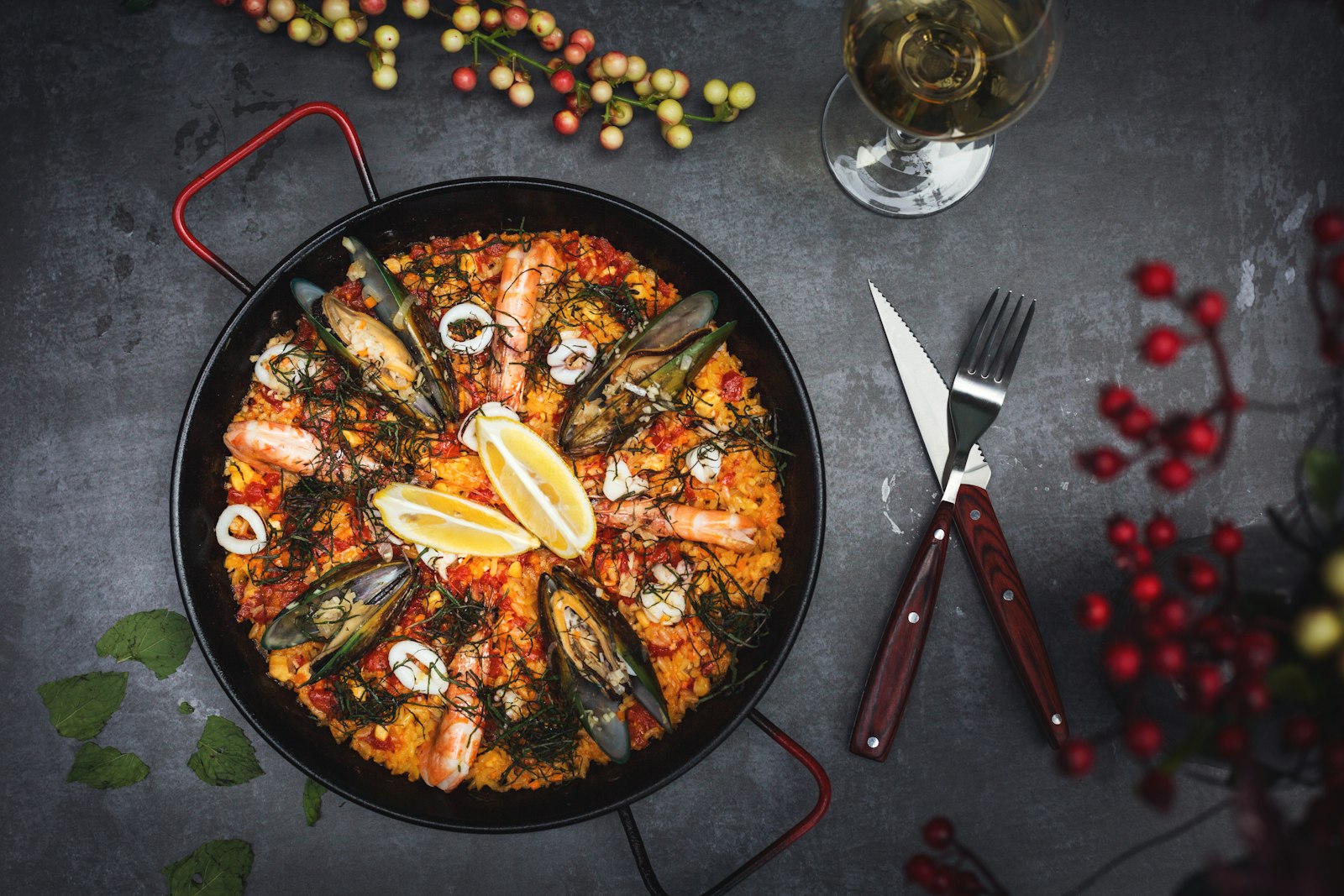
Paella is one of those dishes the world keeps getting wrong in confident, cheerful ways. It is sold as Spain's national dish on menus from Berlin to Boca Raton, dressed up with chorizo, peas and whatever shellfish happened to be on sale, and served with the kind of garnish that would make a Valencian cook quietly leave the room. The truth is smaller, older and far more interesting — a story of farmhands, flat pans and fire.
At Cafe Mi Vitrola we grew up on Cuban rice dishes that share paella's DNA, so we have always had a soft spot for its origin story. Here is what the dish actually is, where it came from, and six variations — honest ones — worth cooking at home.
Where paella really comes from
Paella was born in the countryside around Albufera, a freshwater lagoon just south of the city of Valencia, sometime in the mid-nineteenth century. It was farm food: rice from the paddies, snails from the fields, rabbit that wandered too close to the kitchen, sometimes chicken, sometimes duck. It was cooked outdoors over orange-wood fires because that is what was there to burn, and it was eaten straight from the pan with a wooden spoon, often standing up.
The name is quietly revealing. "Paella" comes from the Latin patella — meaning a wide, shallow pan — by way of Old Catalan and Valencian. In other words, paella is not the name of a recipe. It is the name of the vessel. Call a dish "paella" in Valencia and you are literally calling it "the pan." The rice took the name of the thing it was cooked in, the way a casserole did in French kitchens or a tagine did in Morocco.
That matters, because it means paella is not a single sacred formula. It is a technique — a way of cooking rice thin and wide over open heat so that it absorbs flavor on top and crisps on the bottom. Everything else is detail.
The things that are not negotiable
If paella is a technique, a few parts of that technique are genuinely non-negotiable. Get these right and you will cook something recognizable. Get them wrong and you will cook risotto with a tan.
The rice. Use a short, absorbent Spanish rice — Bomba, Calasparra or Senia. These varieties drink in roughly three times their volume in liquid without turning gluey. Arborio will betray you. Long-grain will mock you. Find the right rice or cook something else.
The pan. A proper paellera is wide, thin-bottomed carbon steel with low sloping sides. Width matters more than depth: the rice should sit in a single layer, no more than a thumb's width tall. Too deep and the top steams while the bottom scorches.
The heat. Paella wants an even, lively fire — gas, wood or a very good burner. The traditional cook rotates the pan so every edge sees the flame.
The socarrat. This is the caramelized, almost-burnt crust of rice stuck to the bottom of the pan at the end of cooking. It is the whole point. You coax it out in the last two minutes by raising the heat, listening for a faint crackle and resisting every instinct to stir.
And the cardinal rule: do not stir. Once the rice hits the stock, you leave it alone. Stirring breaks the starch and bullies the grains into stickiness. Shake the pan gently if you must, but keep that spoon in the drawer.
A Valencian saying goes: the man who stirs the paella is the same man who talks during the flamenco. Everyone forgives him. No one invites him back.
How paella traveled to Cuba
Spain's culinary fingerprints are all over Cuban cooking, and paella is one of the clearer prints. Spanish settlers — many of them Canarians, Catalans and Valencians — arrived in waves from the sixteenth century onward and brought their rice dishes with them. The pan changed, the fuel changed, and the pantry changed, but the logic survived.
Cuban arroz con pollo is, in a very real sense, paella's island cousin. The rice is still short-grain, still stained yellow — in Cuba usually with bijol (annatto) rather than saffron — and still cooked in one wide pan with chicken, peppers and sofrito. A good Cuban kitchen will coax something very like socarrat out of the bottom of the caldero, and call it the best part. You can read the lineage in every bite.
Six variations worth cooking
With the technique settled, here are six versions of the dish — each a real tradition, each worth your time.
1. Paella Valenciana
The original. Rabbit, chicken, flat green beans (ferraura), a white butter bean called garrofón, tomato, saffron, paprika, rosemary and, yes, snails. No seafood, no chorizo, no peas. It is the recipe the Valencian regional government has tried, only half-jokingly, to protect by law. Cook it once and you understand why.
2. Paella de Mariscos
The seafood paella most Americans picture. Shrimp, mussels, clams, cuttlefish or squid, often langoustines on top. Built on a deeply reduced fish stock (fumet) and swirled with saffron. Lighter on paprika than the Valenciana, heavier on garlic. No meat.
3. Paella Negra
Jet-black from squid ink, with cuttlefish, shrimp and sometimes a crown of baby squid. The flavor is bracing and deeply marine — more Catalan in sensibility than Valencian. Serve with a sharp alioli and brace yourself for the teeth-blackening photos.
4. Paella Mixta
The restaurant crowd-pleaser: chicken, chorizo, shrimp, mussels, peppers, peas. Purists sneer. Everyone else eats a second plate. It is honest if you do not call it Valenciana. Think of it as the Spanish equivalent of a hotel-breakfast omelet — pleasant, democratic, slightly embarrassed.
5. Fideuà
A cousin, not a paella — but cooked exactly the same way, in the same pan, with short toasted noodles instead of rice. It comes from the fishing towns of Gandía on the Valencian coast. The noodles curl upward like tiny flames as they crisp. Serve with alioli and a cold glass of Albariño.
6. Cuban Arroz con Pollo
Our favorite ringer on the list. Chicken thighs marinated in garlic, cumin and bitter-orange mojo, then braised with rice, peppers, peas and a shot of beer or dry white wine. It is paella's warmer, louder sibling — the one that puts music on. If you want to try your hand, start with our Cuban cooking fundamentals and work your way up.
A few pro tips from our kitchen
Toast the rice in the sofrito for a full minute before adding stock — this seals the grains and gives you a shot at real socarrat. Use hot stock, not cold; cold stock stalls the pan and ruins the timing. Salt the stock, not the rice, and taste it before you commit. Bloom your saffron in a little warm stock for ten minutes before it hits the pan.
Finally, when the rice looks almost done, crank the heat for ninety seconds and listen. A whisper of crackling means the socarrat is forming. If you smell burning, you went too far. The line is thin and the reward is enormous. Rest the paella off the heat, covered with a clean kitchen towel, for five minutes before serving — and bring it to the table in the pan.
Frequently Asked Questions
Is it a sin to put chorizo in paella?
In Valencia, yes, loudly. In the rest of the world, no — but call it paella mixta or just "rice with chorizo and shrimp" and the Spaniards in the room will relax.
Can I make paella without saffron?
You can use sweet paprika and a pinch of annatto for color, as Cuban cooks often do. You will lose some of the floral depth, but the dish still works.
What is the best pan size for home cooking?
A 13 to 15 inch (34–38 cm) carbon steel paellera serves four comfortably. Anything smaller and the rice sits too deep; anything larger and you need a dedicated burner ring.
Keep reading
Related: Authentic Ropa Vieja Recipe · The Cuban Sandwich: Miami vs. Tampa